The Most Haunted Places in Gettysburg
Jennie Wade House, Farnsworth House, Devil's Den and more: what really happened at Gettysburg's most haunted places, which stories are legend, and how to see them.
Three days of fighting in July 1863 left tens of thousands of men dead, wounded or missing, and a town of a few thousand people to deal with the aftermath. That is where Gettysburg’s ghost stories come from. Below, each place gets two answers: what the historical record says, and what the legend says.
Is Gettysburg one of the most haunted places in America?
It is one of the most storied. No one can measure a haunting, but few American towns have as much documented trauma packed into so few streets, and few have been telling ghost stories about it for as long. Whether you believe them is up to you; the history underneath them is real.
Jennie Wade House
History: Mary Virginia “Jennie” Wade, aged 20, was kneading bread in her sister’s house on Baltimore Street on 3 July 1863 when a stray bullet passed through two doors and killed her. The National Park Service describes her as the only civilian killed during the battle. The house took heavy fire and still shows it.
Legend: visitors and staff tell of a presence in the kitchen and cellar, and an old superstition says an unmarried woman who puts a finger through a bullet hole in the door will be engaged within a year.
Farnsworth House
History: a house on Baltimore Street that stood in the line of fire; by the house’s own account its brick wall is still pocked by bullet strikes from the battle. Local tradition holds that Confederate sharpshooters fired from its garret.
Legend: the house is now an inn and restaurant that tells its own ghost stories, including a sharpshooter who never left and a midwife who visits a particular room. It is a stop on several walks, including the History and Haunts family tour and the Ultimate Dead of Night tour.
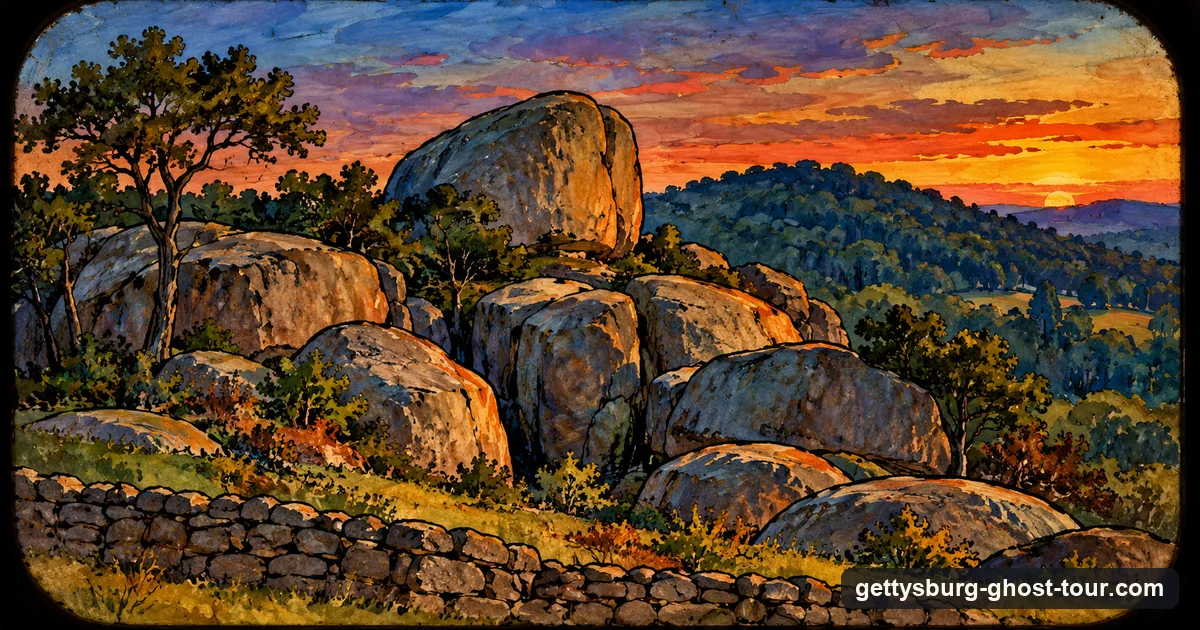
Devil’s Den
History: a field of granite boulders below Little Round Top, fought over on 2 July. After the battle, Alexander Gardner’s team photographed a dead Confederate soldier there for “The Home of a Rebel Sharpshooter”. Historians later showed the body had been moved some yards into the rocks for the picture, which makes it one of the best-known staged photographs of the war.
Legend: photographers whose cameras fail among the rocks, and a barefoot figure who points the way. Note that the park’s grounds close 30 minutes after sunset, so night visits to Devil’s Den are off the table; see it in daylight with a battlefield tour.
The David Wills House
History, not legend: Lincoln spent the night of 18 November 1863 here and finished the Gettysburg Address in his second-floor room, according to the Park Service. The family-friendly Ghost City tour passes it.
The Dobbin House
History: the tavern dates its building to 1776. Legend: a house that sheltered people escaping slavery, and soldiers who never checked out. It is a stop on the Boos & Booze haunted pub crawl.
Seeing them after dark
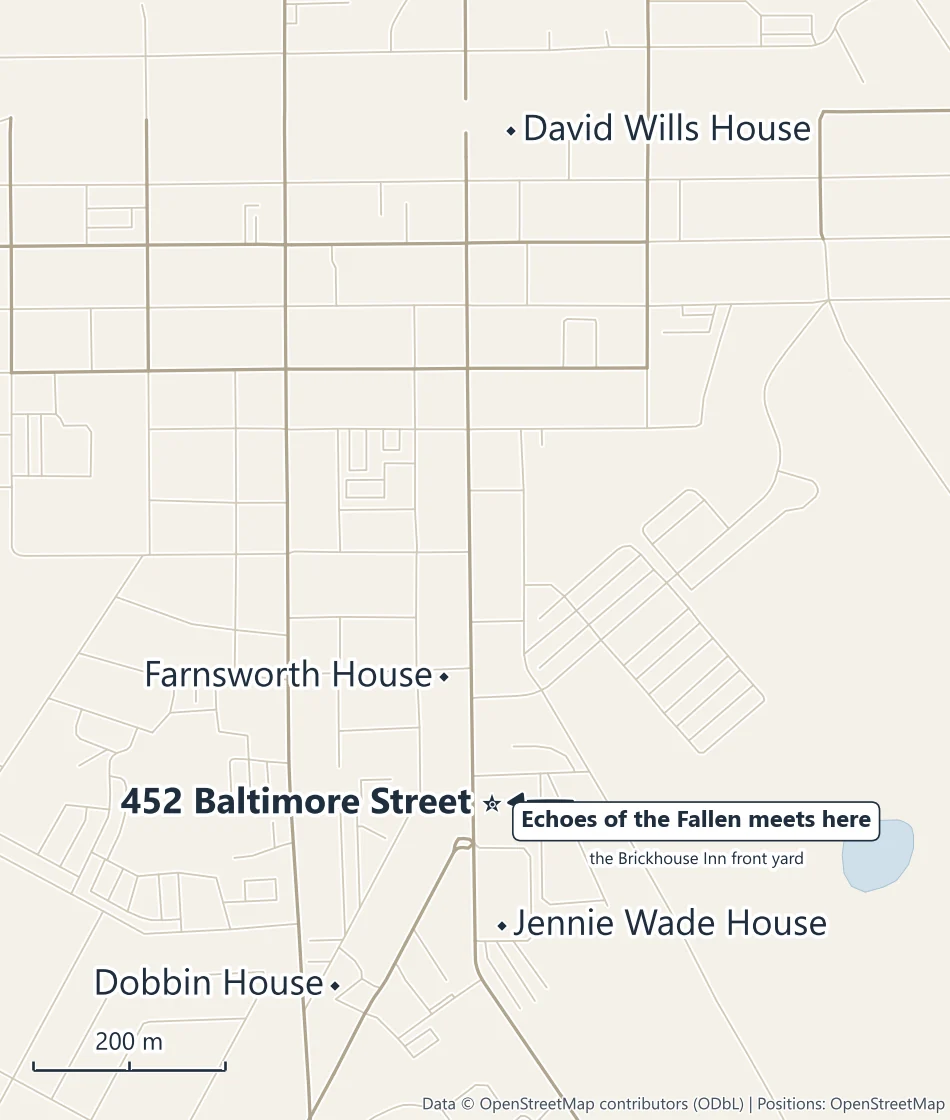
The Echoes of the Fallen ghost walk (4.4 from 553 reviews, from $21 (GetYourGuide, checked October 2026)) meets at 452 Baltimore Street and works its way through the historic district, past houses that still carry 150-year-old bullet holes, including the Jennie Wade House. A guide with a lantern tells you which parts are documented and which are lore, which is the right way to hear these stories.
Book Your Experience
Check Availability & Prices
Select your preferred date and time. Cancel up to 24 hours in advance for a full refund.
Want to try ghost-hunting equipment at these sites? Compare the options in paranormal investigation vs ghost walk, or see the best ghost tour in Gettysburg.

Walk the haunted blocks of Baltimore Street
The Echoes of the Fallen ghost walk passes the battle-scarred houses of the historic district with a lantern and a guide who knows both the record and the legends.
Check dates